Primary project / AI product system
Plato
Plato is an AI-assisted product workbench for turning ambiguous product work into durable plans, documents, and verifiable execution loops.
User value
Turning AI from a chat box into a durable product work loop.
Reduce task ambiguity
Turn rough product intent into clear goals, task frames, document structures, and reviewable next actions.
Preserve work continuity
Keep decisions, context, artifacts, and execution state available across long-running AI-assisted work.
Make output verifiable
Move AI work away from one-off generation and toward evidence, acceptance gates, recovery paths, and usable artifacts.
Product loop
Designed around repeatable AI-assisted execution.
The product idea is not to make AI answer faster. It is to make work easier to define, continue, inspect, and recover when a task spans many decisions and artifacts.
- 01 Capture intent
- 02 Build task context
- 03 Plan execution loop
- 04 Create project assets
- 05 Review evidence
- 06 Recover and continue
Product highlights
What this project proves.
Plato is evidence of product judgment: how to define Agent workflows, manage complexity, and turn generative work into operational value.
Use context governance to maintain stable task state instead of relying on temporary prompt history.
Make documents the center of work so plans, notes, and decisions become durable project assets.
Use human review gates before Agent output becomes project evidence.
Design the execution loop around recovery, continuation, and repeatable product operations.
Show sustained engineering capacity beyond prototype speed.
Connect writing and project proof into a complete story for AI product roles.
Concept model
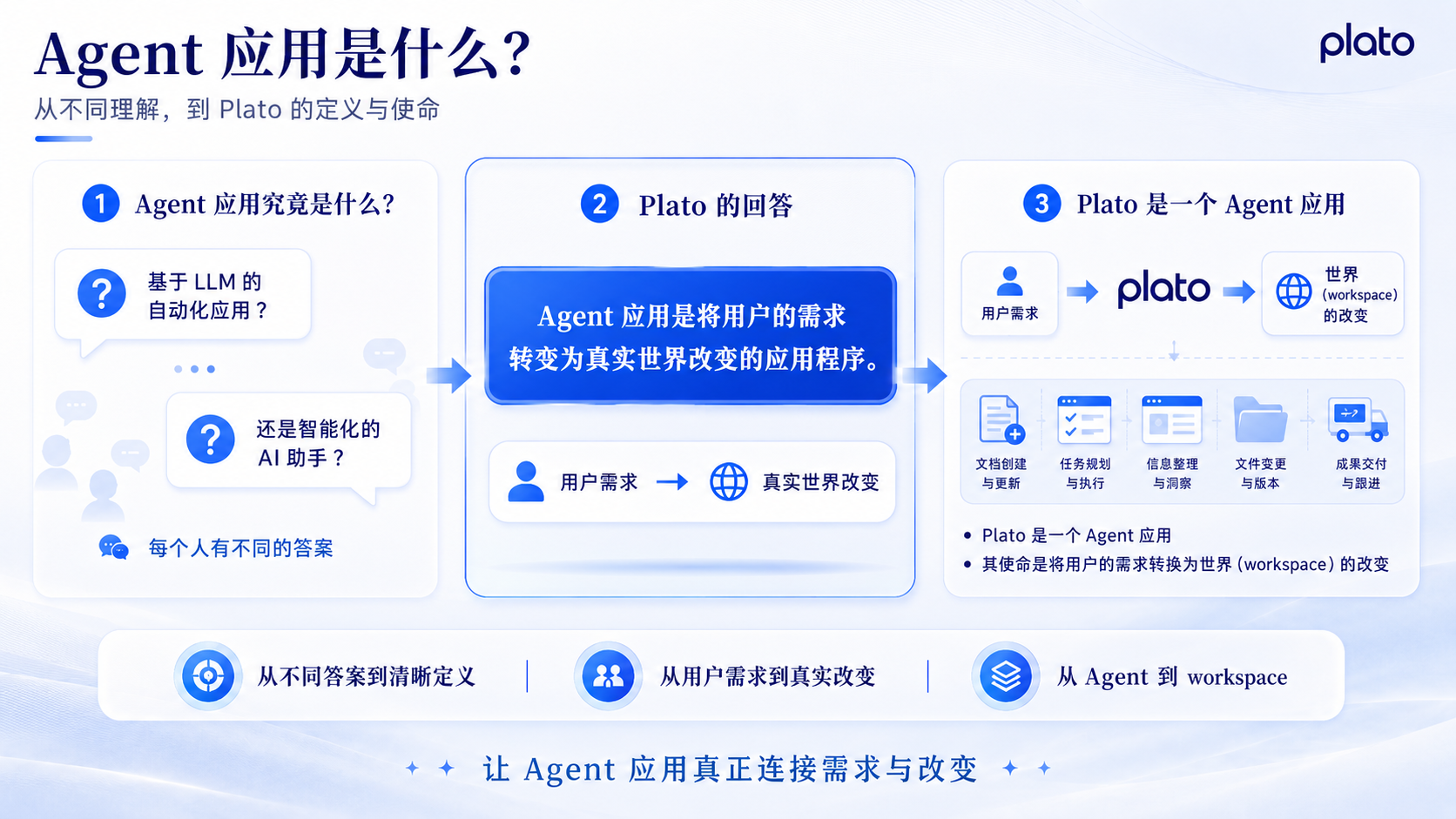
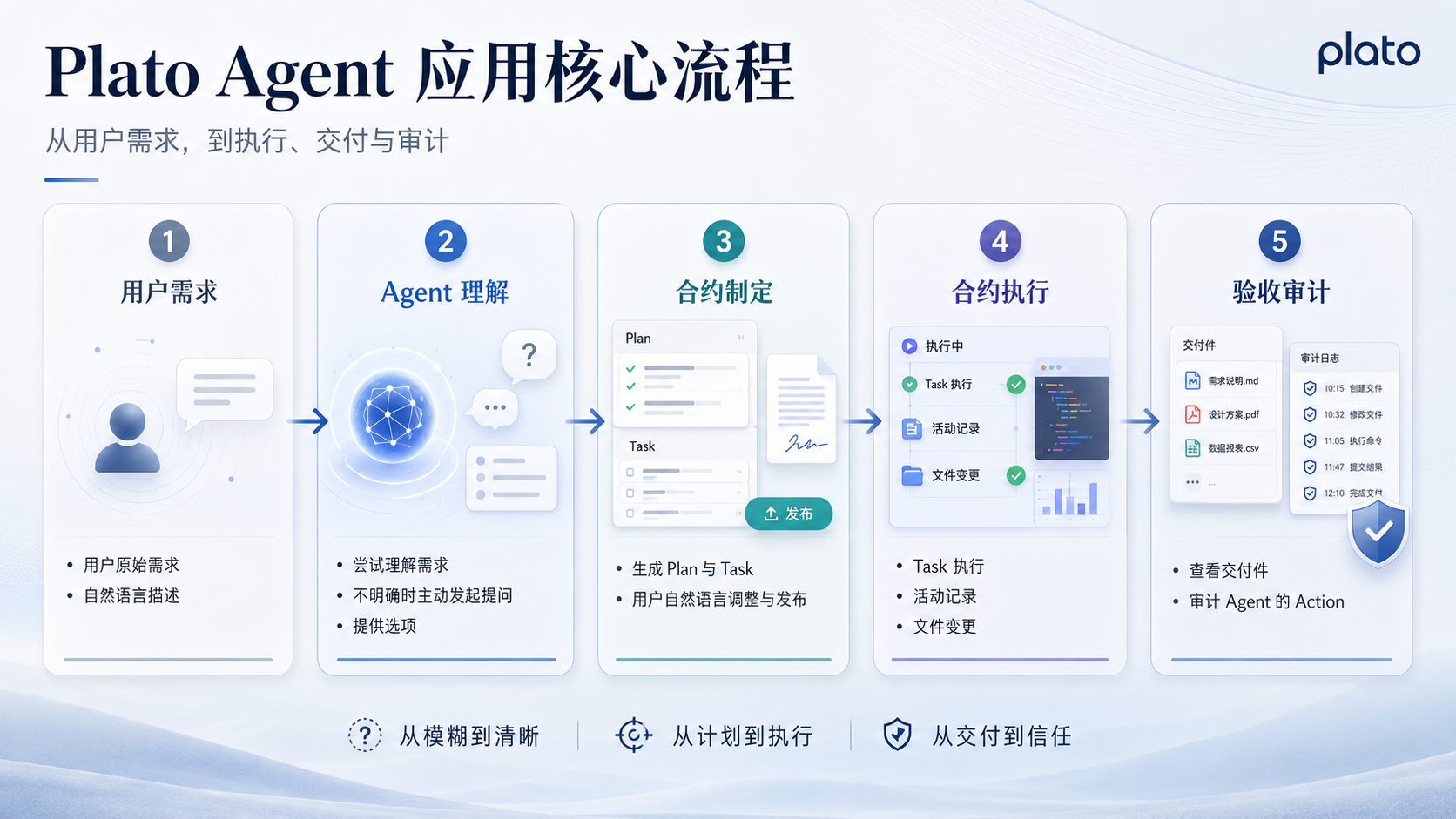
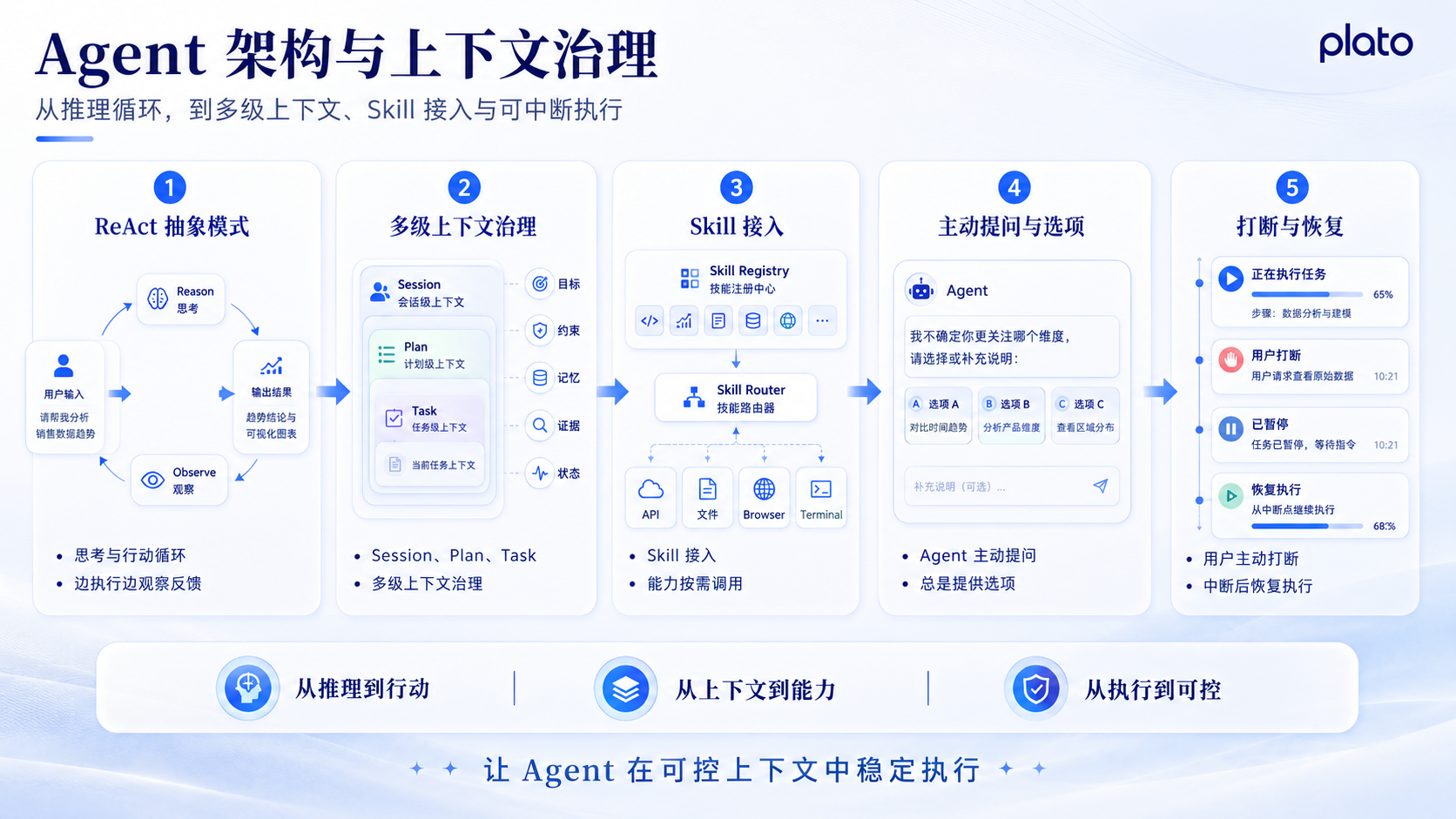
Explain the product model first, then show the interface.
The concept, flow, and architecture diagrams make Plato easier to understand before visitors inspect screenshots. They frame the project as an Agent product system rather than a set of UI images.
Architecture visuals
Interactive pages for Plato's core objects and runtime flows.
The Architecture Explorer collects standalone visual pages generated by the visual-demo-page skill. The first published visual is Agent Loop Data Flow, showing how task input moves through the LLM, tools, workspace, audit trail, and UI output.
Product screenshots
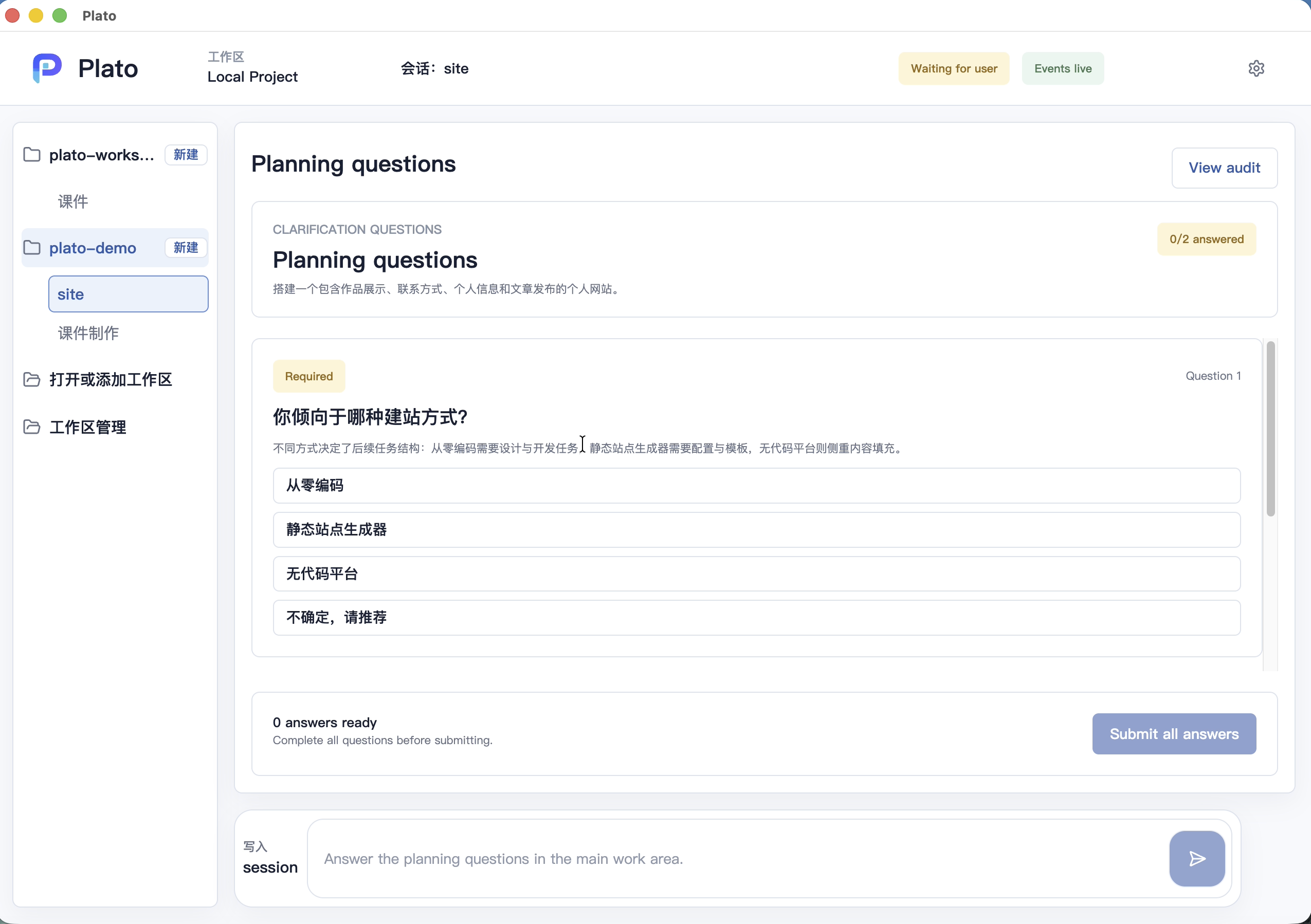
Real work surfaces behind the product claim.
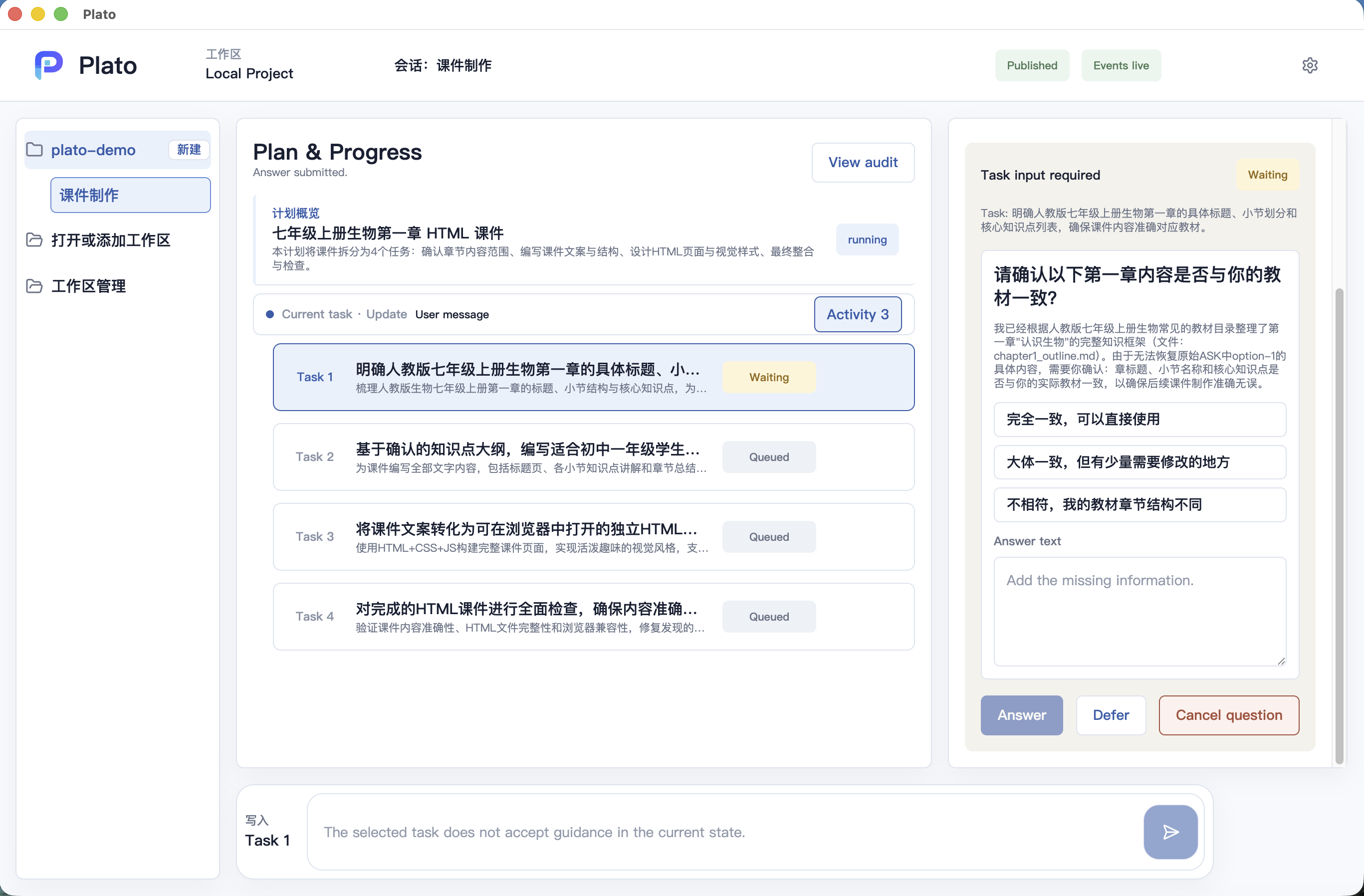
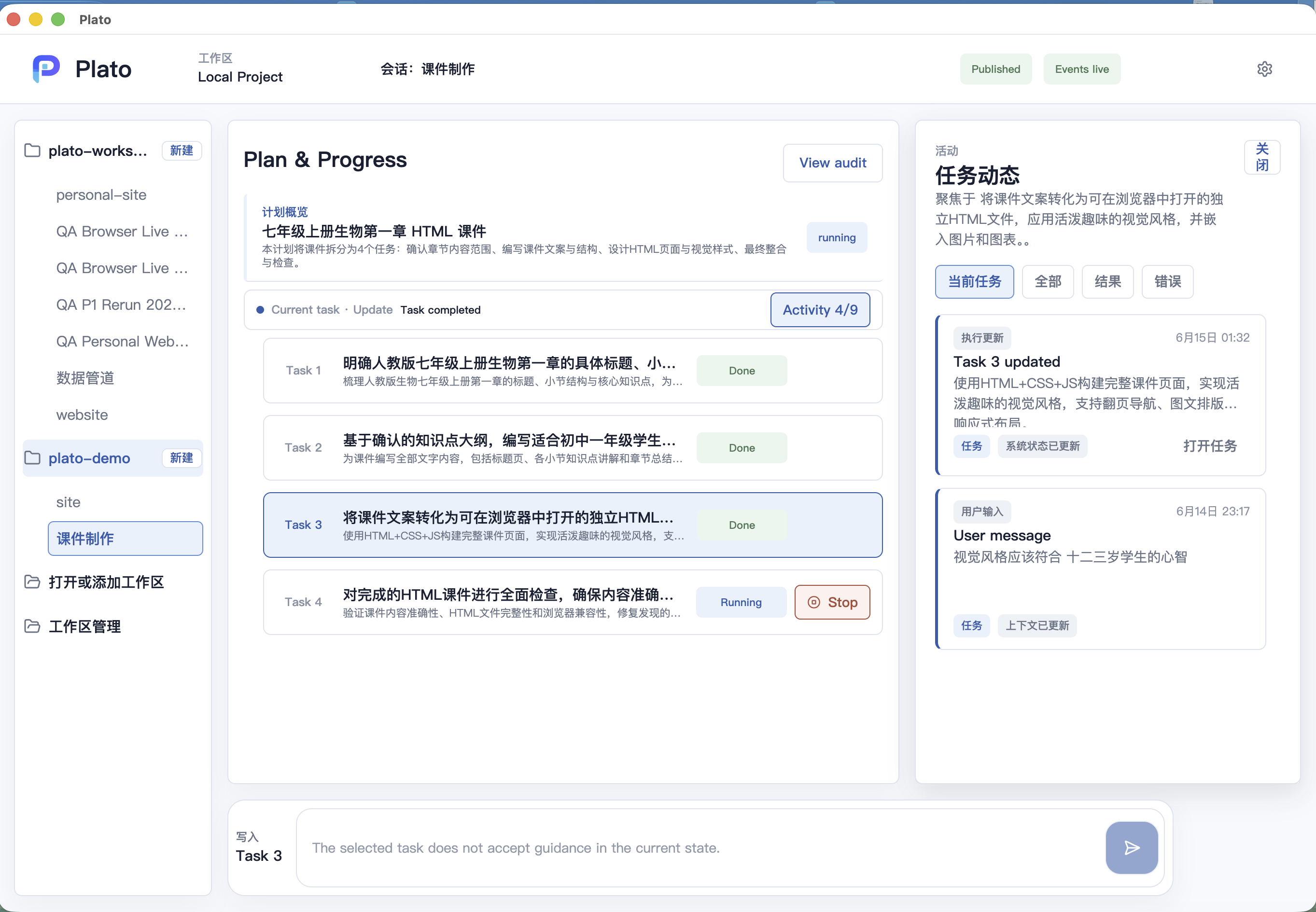
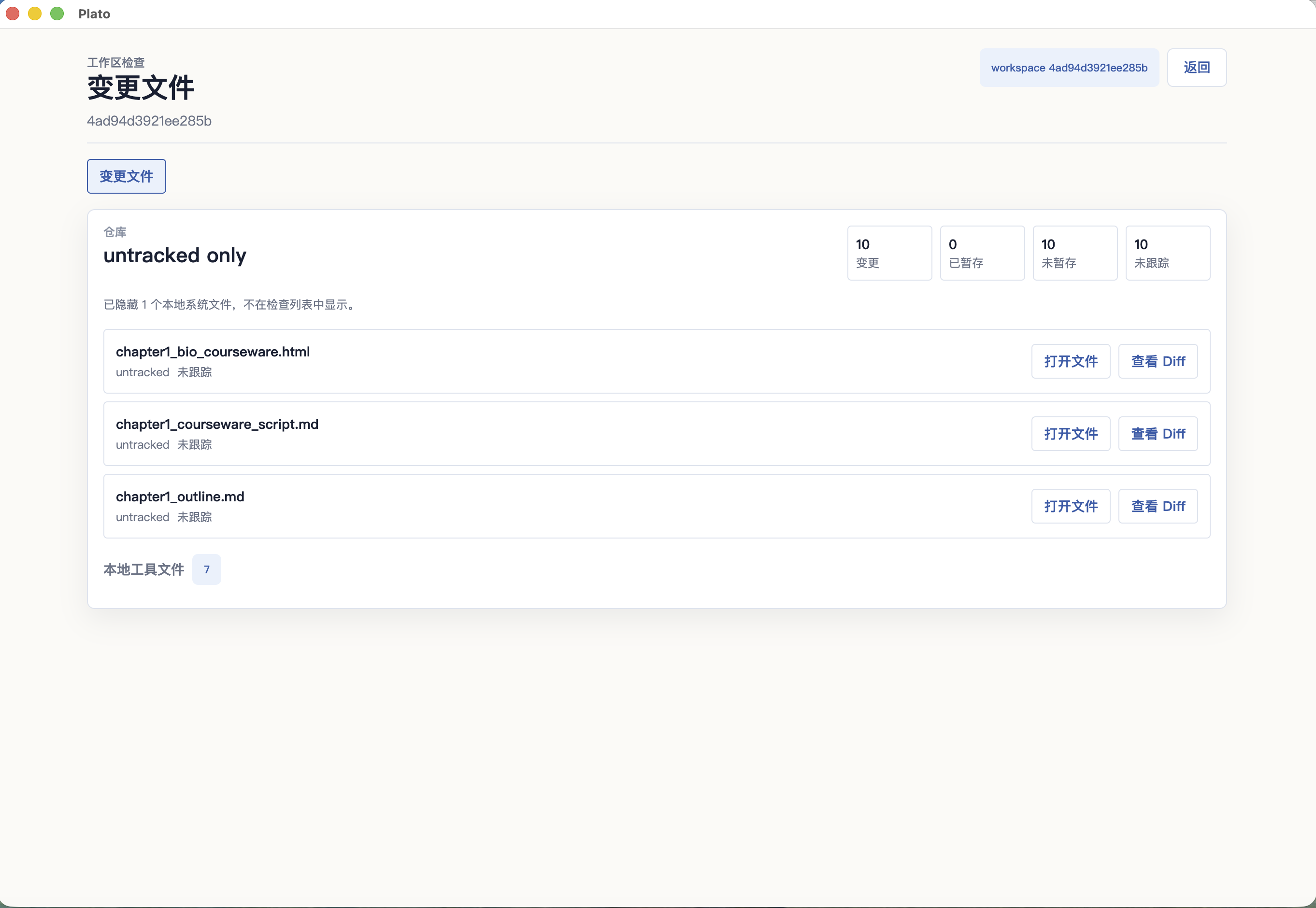
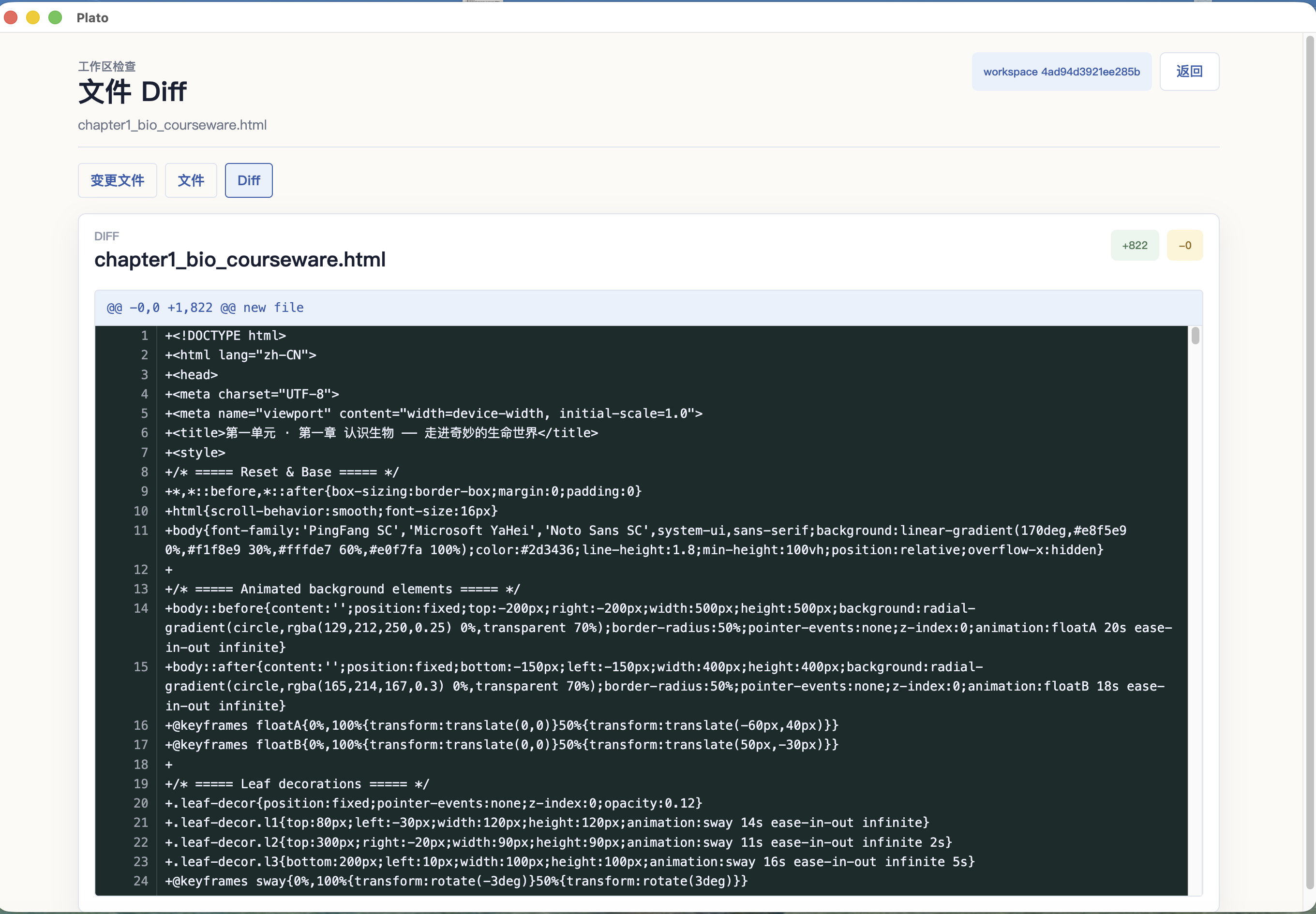
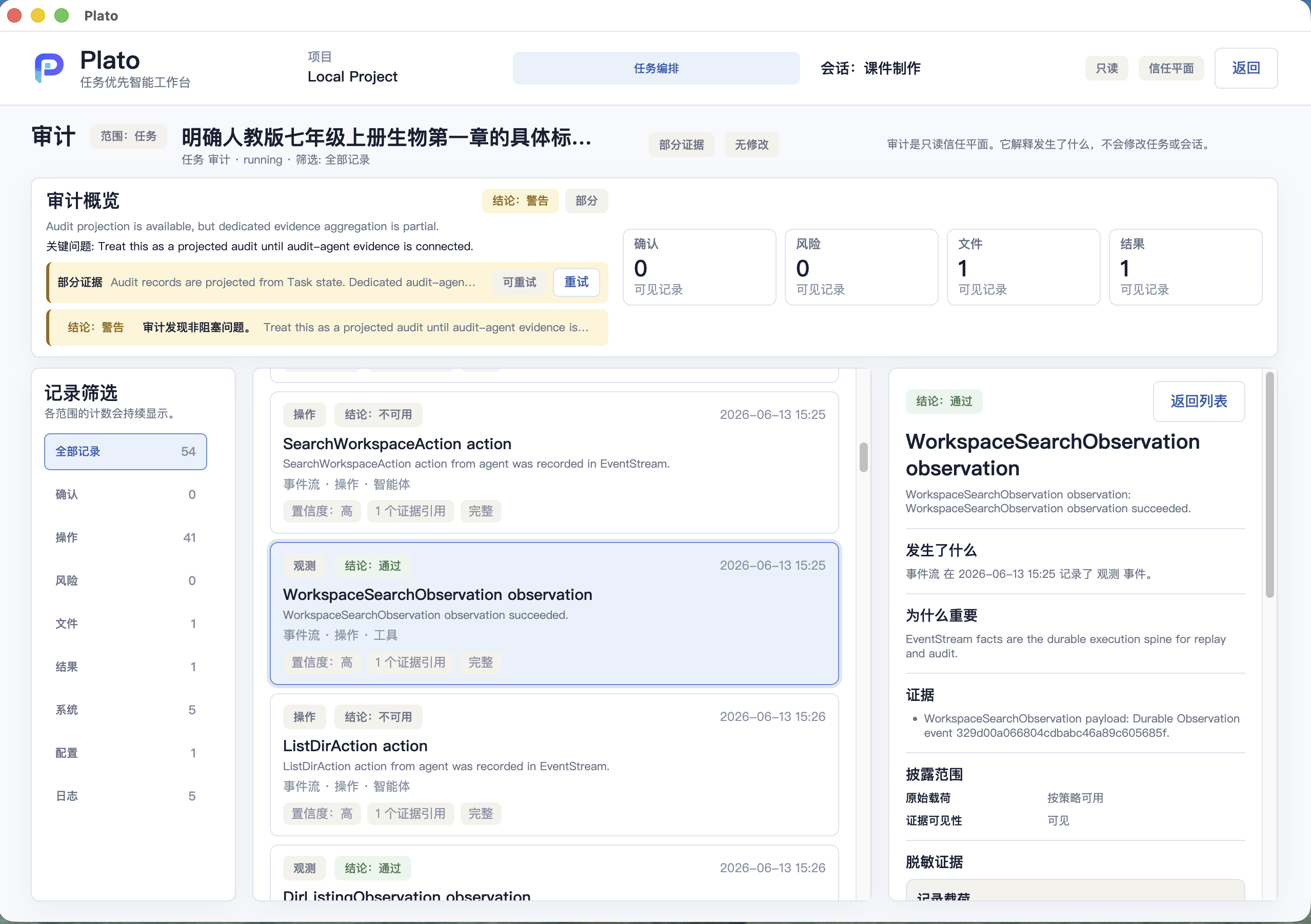
These screenshots focus on the behaviors that matter in Agent product work: clarification, session continuity, file evidence, diff review, and trust management.
Scale evidence
Enough scale to show sustained product and engineering investment.
Updated Jun 12, 2026
Role relevance
Why this matters for Agent product roles.
Agent products fail easily when they are treated as page design or prompt assembly. Plato focuses on a deeper product surface: state models, context contracts, recovery behavior, review gates, and artifact quality.
That makes it a strong recruiting case: it connects user confusion, product workflow design, technical constraints, and deliverable evidence into one system.
Related articles